

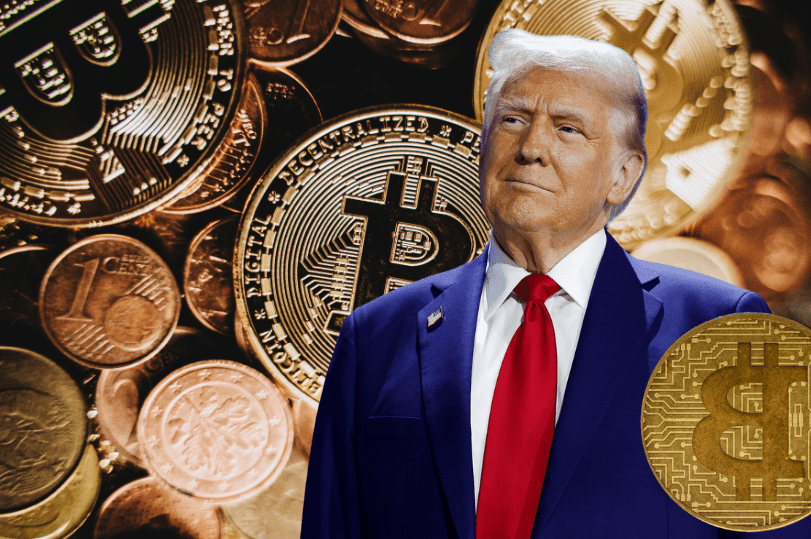
President Donald Trump signed an executive order to create a strategic reserve for Bitcoin. The move places the United States among a short list of countries that have created a national stockpile of blockchain assets.
The reserve will be made up of cryptocurrency the federal government has taken over through criminal or civil enforcement. White House AI and crypto advisor David Sacks made the announcement in a tweet on X. Notably, the U.S. government will not be selling any Bitcoin that is being kept in the reserve. It will instead hold it as a long-term asset.
Only four years ago, Trump ridiculed Bitcoin as a “scam.” Today, he plans to make America “the Crypto Capital of the World.” Additional details are to be revealed during the first-ever crypto summit at the White House on Friday. Yet questions surround possible legal hurdles and whether Congress must sign off on the proposal.
Sacks referred to the reserve as a “digital Fort Knox,” comparing it to a Kentucky military installation that holds a significant portion of U.S. gold. The executive order also creates a hoard for other cryptocurrencies that have been forfeited, representing a more expansive strategy toward digital assets.
A complete reckoning of the federal government’s cryptocurrency reserves is also due. Sacks puts the U.S. at around 200,000 Bitcoin, worth about $17.5 billion (£13.6 billion) at current prices. Although the advantages of the new stash to ordinary Americans are uncertain, Sacks reassured the public that it “will not cost taxpayers a dime.”
After this declaration, the value of Bitcoin fell by over 5%. Sacks suggested that the government would not be buying Bitcoin, which also led to its value decrease. Most countries maintain strategic reserves of different assets for diversification purposes and to hedge against financial risk. For example, the United States has a petroleum reserve, and Canada maintains a maple syrup reserve.
Earlier this week, Trump named five cryptocurrencies he wants to add to the reserve: Bitcoin, Ethereum, XRP, Solana, and Cardano. Since making that announcement, the market prices of these coins have skyrocketed.
Trump used to actively interact with the crypto community during his presidential campaign, while former President Joe Biden placed more stringent regulations on the industry in response to fraud concerns.