
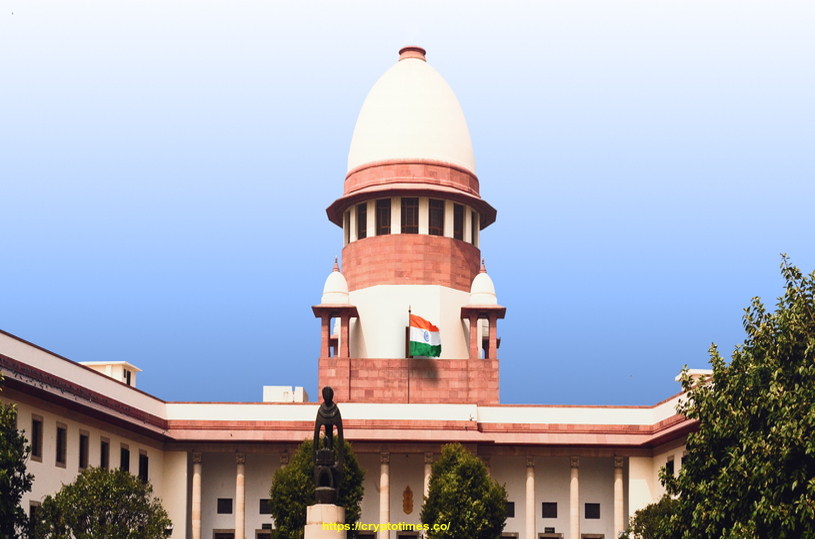
In a landmark hearing on May 19, 2025, India’s Supreme Court called upon the central government to urgently define a regulatory framework for cryptos — asserting that banning is not a viable path forward.
Recently, the two-judge bench, comprising Justices Surya Kant and N. Kotiswar Singh, highlighted the contradiction of taxing crypto profits at 30% and charging 1% TDS at every trade, without offering legal protection or oversight to investors and platforms alike.
The court’s comments came during a hearing on a fraud case involving alleged misuse of crypto assets, where the bench pointed out how, in the absence of clear laws, such matters are increasingly difficult to adjudicate. The judiciary’s push places renewed pressure on lawmakers to end years of ambiguity in the country’s approach to digital assets.
This judicial nudge arrives at a time when the Indian crypto ecosystem is in a state of cautious transition. WazirX, once India’s largest crypto exchange, has found itself at the center of the regulatory conversation following a 2024 cyberattack that led to the loss of user funds. But rather than retreat, the exchange has actively embraced the call for reform, positioning itself as a case study in both the risks and resilience of the industry.
In the aftermath of the attack, WazirX underwent a complete operational overhaul. Its leadership implemented a creditor-approved restructuring plan, pursued third-party security audits, and partnered with global custodians to safeguard digital assets going forward. Most notably, the company, along with other key players in the industry, has publicly endorsed in the past the need for formal regulations, stating that legal clarity is essential for protecting users and enabling responsible innovation.
Industry analysts note that the Supreme Court’s remarks reinforce what Indian crypto businesses have argued for years — that regulatory ambiguity leaves platforms and investors exposed.
Experts say that while the government’s hesitance may stem from concerns over misuse, regulation, not prohibition, is the only sustainable path. Countries like Singapore, the UK, and the UAE have demonstrated that crypto markets can thrive responsibly with proper oversight. India’s innovation-driven tech economy stands to benefit from similar clarity.
As the government considers its next steps, the onus now lies on the Ministry of Finance and relevant agencies to act decisively. The Supreme Court’s stance could be the turning point India’s crypto space has long awaited.