

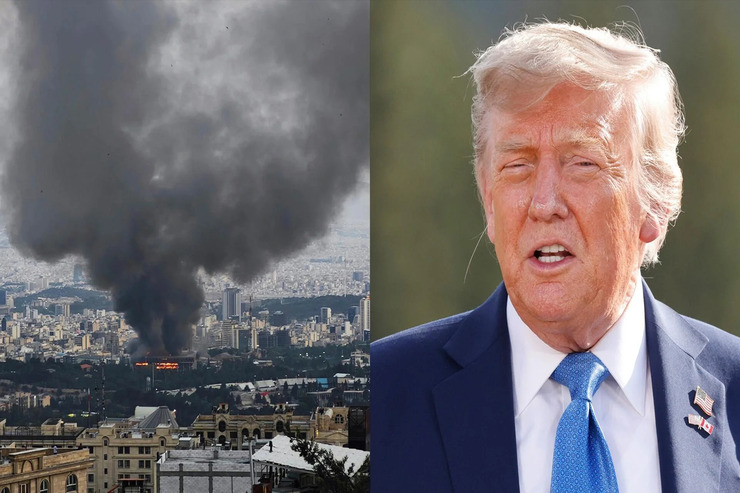
In a stunning reversal of his longstanding non-interventionist stance, U.S. President Donald Trump has authorized a sweeping military assault on Iran’s nuclear infrastructure — a move widely seen as the most consequential foreign policy gamble of his presidency.
The strikes, launched over the weekend in coordination with Israeli forces, targeted some of Iran’s most fortified nuclear sites, including the underground Fordow facility. According to White House officials, the decision came after Trump concluded that Tehran had no intention of returning to nuclear negotiations. The attacks, reportedly involving high-penetration bunker-buster bombs, were described by Trump as a “great success” aimed at forcing Iran back to the diplomatic table.
However, foreign policy analysts warn the operation may instead ignite a broader, long-term conflict.
From “No New Wars” to Military Escalation
Throughout his first term, Trump repeatedly pledged to avoid prolonged military entanglements, criticizing what he termed “endless wars” in Iraq and Afghanistan. But just six months into his second term, he now finds himself opening a new military front — one that threatens to entangle the U.S. in a high-stakes confrontation with Tehran.
This sudden shift has drawn criticism from both Democratic lawmakers and members of Trump’s MAGA-aligned base, many of whom are deeply skeptical of U.S. military involvement abroad. Opponents argue that the operation contradicts Trump’s previous messaging and could spiral into a protracted regional conflict.
Retaliation Risk Looms Large
Experts say Iran’s potential response remains unpredictable but potentially severe. Retaliatory options include closing the Strait of Hormuz — a vital global oil chokepoint — escalating missile attacks on U.S. allies like Israel or activating proxy networks across the Middle East.
Iran’s Atomic Energy Organization dismissed the strikes as an attempt to halt its “national industry” and vowed that its nuclear development would continue. State media figures have openly declared that American personnel and assets in the region are now legitimate targets.
Diplomatic Dead-End or Tactical Reset?
Some regional observers believe Iran may eventually seek a diplomatic off-ramp, albeit from a significantly weakened position. Others fear that the strikes have all but killed the prospect of negotiation, hardening Tehran’s resolve to pursue nuclear capabilities for deterrence.
The Arms Control Association has warned that military action may not only fail to end Iran’s nuclear ambitions but could accelerate them. Experts note that nuclear knowledge cannot be bombed away — and that strikes may only deepen Iran’s distrust of diplomacy.
Uncertain Fallout
The global implications of Trump’s decision remain to be seen. A prolonged confrontation could disrupt energy markets, strain U.S. alliances, and draw American forces deeper into Middle Eastern conflict zones. It may also embolden rival powers like China and Russia to test the U.S.’s resolve elsewhere.
With Trump already under pressure to fulfill stalled promises on Ukraine and Gaza, this sudden shift into offensive posture in Iran marks a dramatic and risky new chapter in his presidency.
His doctrine of “peace through strength” is now facing its greatest test — not through negotiation or diplomacy but on the battlefield.
Global markets have already begun to price in the risks, with even the crypto sector reacting swiftly. Bitcoin (BTC) briefly dropped below $100,000 over the weekend, while other major altcoins saw sharp declines amid growing geopolitical uncertainty. Fortunately, Bitcoin has since rebounded above the key threshold, but the episode served as a stark reminder that crypto markets — once seen as immune to such events — now move in lockstep with global crises.